|
Cotton, once called, "King Cotton," was the main source
of income for the Lake Creek farmers. The cotton gin was a hustle and bustle of actitivity
in the fall of every year. The cotton season lasted from late August through December,
and the gin ran day and night without stopping, except in emergencies. The gin was
in operation from the mid 1880's through the mid 1960's. With the coming of new manmade fabrics,
cotton became in less demand and many cotton gins closed their doors forever,
bringing to a close the end of and
era.
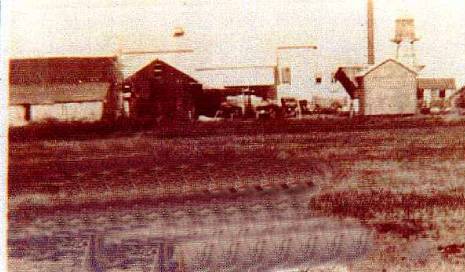
The picture above, of the Lake Creek cotton gin, was taken in 1925. Back then the gin was powered
by a steam engine.
The lady below is Kerry (Johnson) Jenkins, my sister. She turned away and wouldn't
let me take her picture. I don't know if she was embarassed
to have her picture taken by the old rusty gin, or maybe just
to hide a tear as she thought about the the by-gone days. The pictures below were taken in 2003.
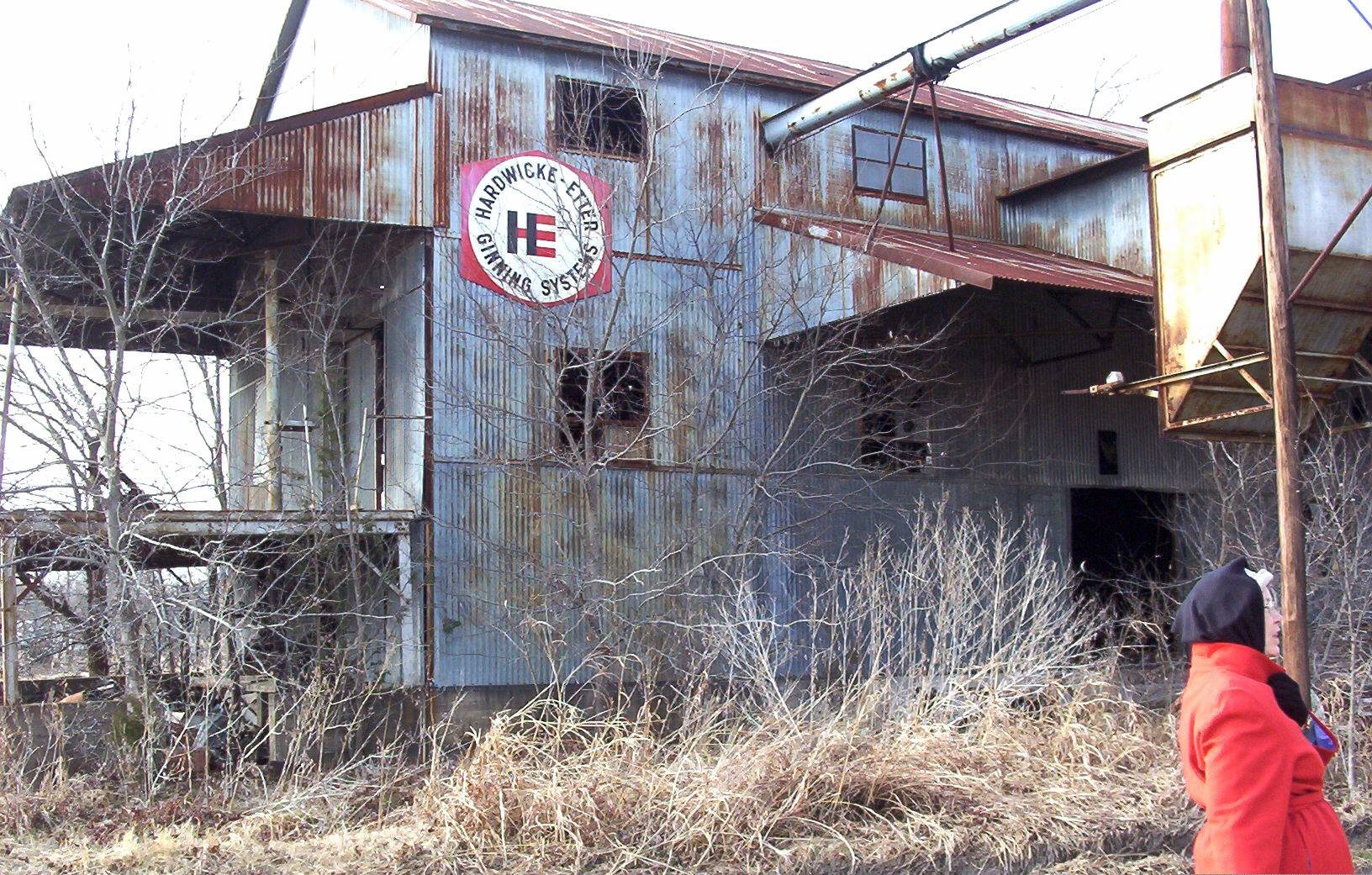
This is the south end of the cotton gin at Lake Creek. The platform (upper left) is
where the cotton bales were brought out. My daddy, Wes Tom Johnson, worked at this gin for many years, starting in the mid
1920's when he was still a teenager. The gin was powered by a steam engine at that time, but was changed over to a diesel
engine in the mid 1940's. Wes Tom worked at this gin and other gins until he died in 1956.

Kerry (Johnson) Jenkins
My brothers, sisters and I used tp play in this gin when we were kids, growing up in the
1940's and 1950's. Kids were not allowed in the gin, especially when it was running, but since our daddy, Wes Tom Johnson,
worked there...it was ok. Now the old rusty gin stands empty and silent, a ghostly reminder of those years so long
ago.
|
|
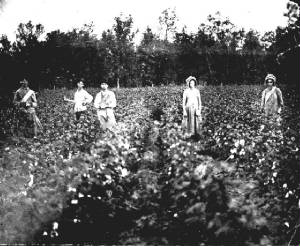
This picture was given to me by Phyllis Carpenter
How would you ladies like to wear a dress AND pick cotton?
This is cottin picking time at the farm of Cassie Kennedy Bell and her husband, James Howard Bell. Cassie was
the youngest daughter of Hiram and Sarah DeWeese Kennedy. Pictured are: Dock Bell, Vert Bell and Ell Bell with
Beatrice and Blanch Wilcox. Blanch and Beatric were daughters of Cora Bell and Walter Benjamin Wilcox. Cora ws raised
by her uncle and aunt, Howard and Cassie Bell.
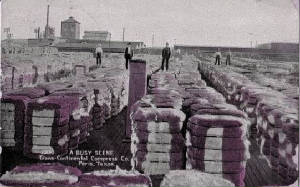
The picture above shows cotton bales at the Continental Compress in Paris, Texas.
All of the cotton ginned at the Lake Creek gin was taken to that compress, as well as many other gins in the area. Paris is
about 17 miles north of Lake Creek. After the cotton bales were compressed into smaller bales, they were shipped by steam
powered trains to textile mills throughout the country, and also shipped abroad.
The comperss has been gone for many years, and now the Lamar County jail has
been built on that property.
Go to: Mack and Mary Gordon
Homepage
|
 |
|
|
|
|
|
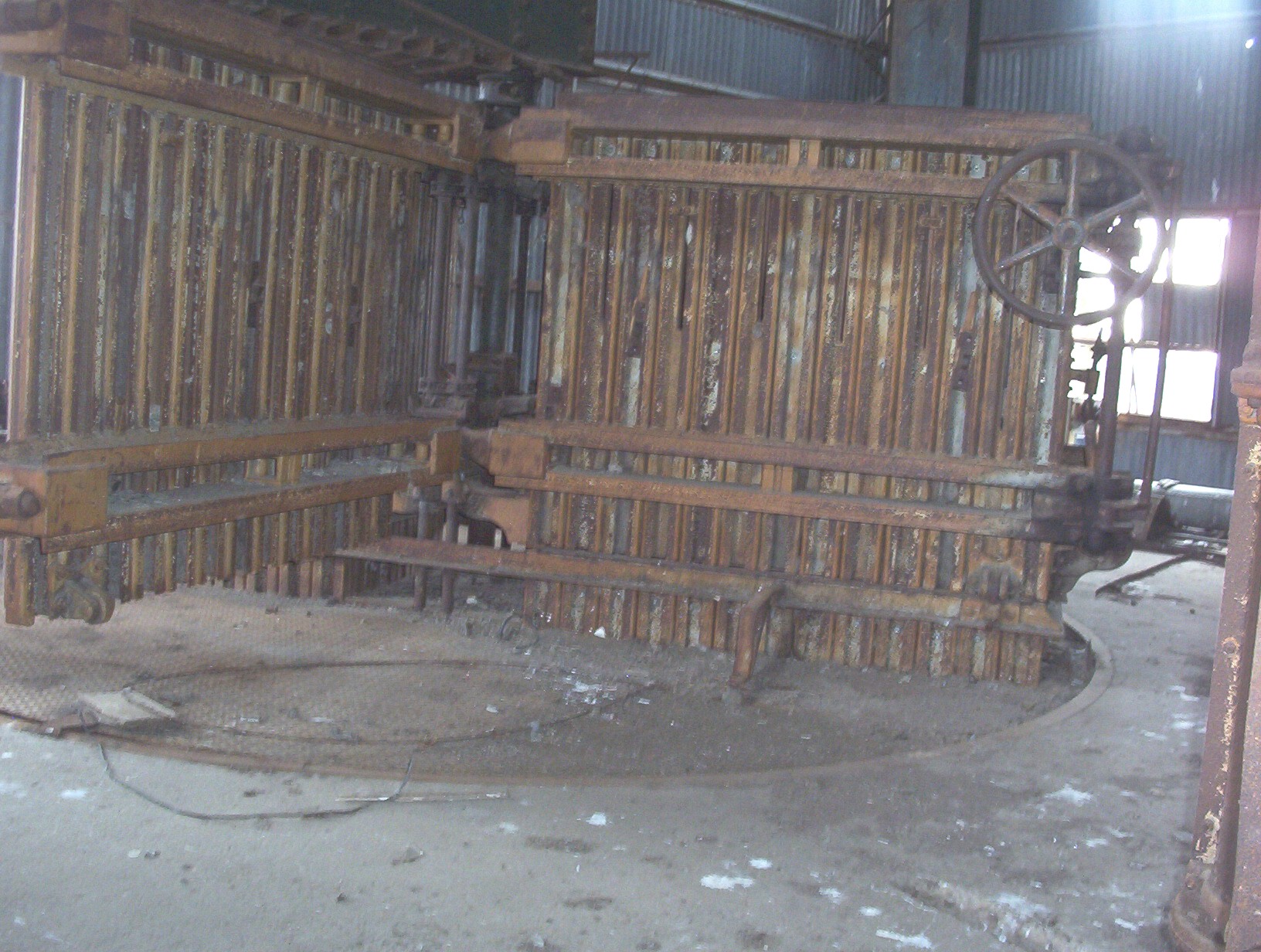
This is the press, where cotton was pressed into a bale. It was upstairs in the back of the
gin. If you look close you can the press is on a turntable. This allowed the cotton to go into the press until it was full,
or a complete bale. Then the men pushed the press around, and the cotton for the next bale would begin to go in another section
of the press. This allowed the previous bale to be wrapped in a heavy burlap-like cover and bound with steel straps. Then
it was weighed and taged. By then the next bale was ready, and the same thing started again.
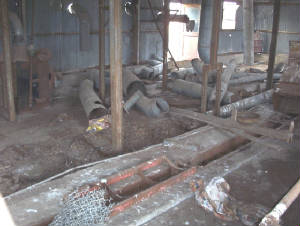
Inside the gin. Most of the equipment has been removed. About those holes in the walls; they
are not windows but openings for equipment, pipes, ducts etc.
Down this right side was a row of machines called 'Gin Stands'. The cotton would fall through
the Stands to have the cotton seeds removed. My daddy's (Wes Ton Johnson) job was to watch the flow of cotton and control
the density of the seed.
Wes Tom Johnson by the Gin Stands
|
|
|
|
|
|